
Hiking with dogs is one of the best things on earth. Period. Fresh air, shared miles, muddy paws, quiet companionship that doesn’t need small talk. But here’s the part nobody likes to say out loud:
A lot of people hiking with dogs are winging it.
And the trail is not the place to wing it.
Most trail conflicts, injuries, and near-misses don’t come from wild scenarios. They come from ignored basics. The “my dog is friendly” crowd. The off-leash-but-no-recall situation. The assumption that nothing bad will happen because nothing bad has happened yet.
So let’s talk about the real rules. Not the posted signs (though, respect those). The unwritten, often ignored rules that keep dogs safe, people safe, and trails accessible for everyone.
No fluff. No guilt. Just straight talk.
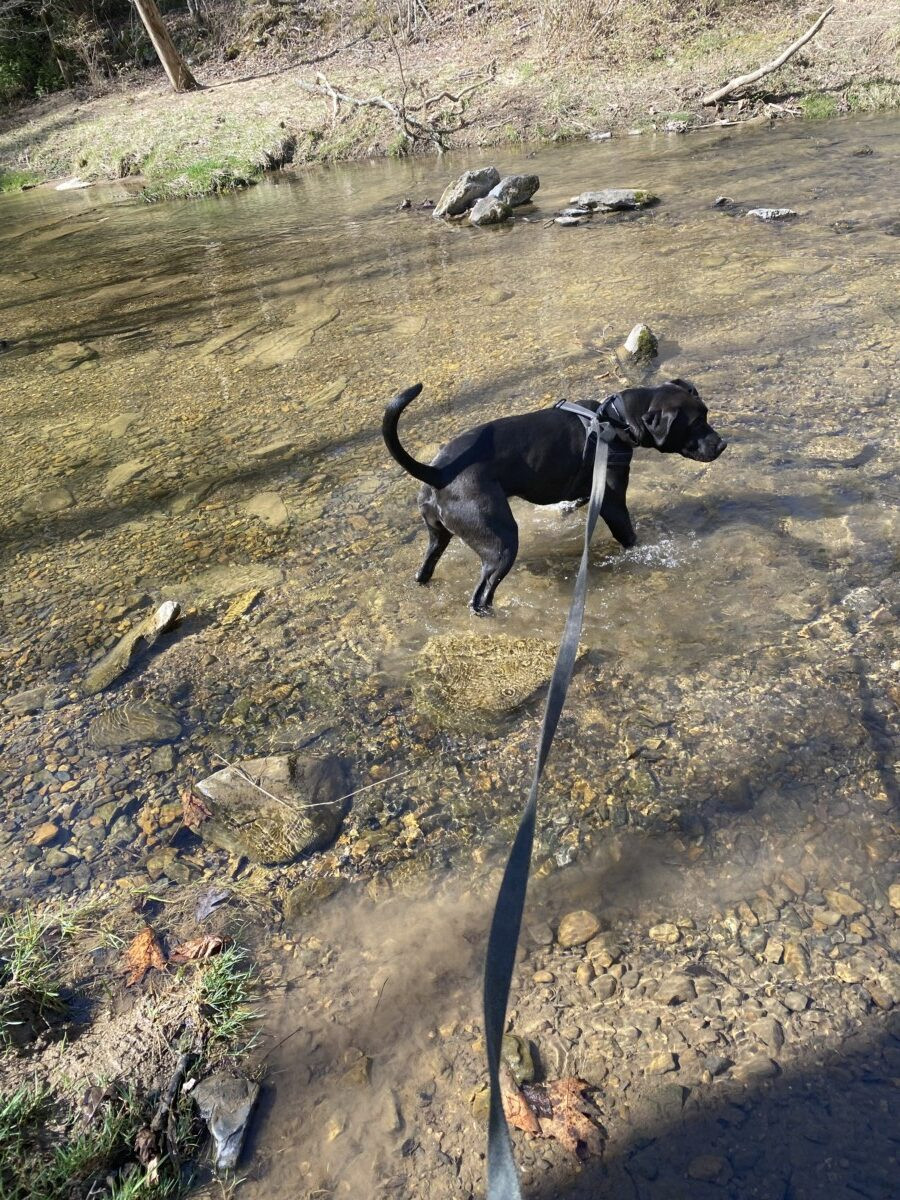
Rule #1: Leash Laws Are Not Suggestions
If a trail says leash required, that’s the rule. Not “unless your dog listens.” Not “unless it’s early.” Not “unless nobody’s around.”
Leash laws exist because:
- Wildlife exists
- Children exist
- Reactive dogs exist
- Horses exist
- People with trauma exist
And yes, your dog might be friendly. Mine might be too. That doesn’t matter.
A leashed dog is predictable. An unleashed dog is a question mark.
Hard truth: the leash isn’t about control, t’s about responsibility.
Rule #2: Recall Matters Even When Your Dog Is Leashed
This one surprises people, so let’s be clear:
I believe in teaching recall even when dogs are leashed.
Why? Because leashes fail. Hands slip. Clips break. Dogs spook. Shit happens.
A dog that can come back to you instantly, even with leash pressure, distractions, or excitement, has a massive safety advantage.
Recall isn’t an “off-leash skill.”
It’s a lifesaving skill.
Practice recall:
- On leash
- On long lines
- In boring places
- In exciting places
If your leash breaks and your dog bolts toward a road, another dog, wildlife, or a cliff edge, recall is the difference between panic and prevention.
Rule #3: “Leave It” and “Drop It” Are Non-Negotiable
This is where people get uncomfortable, so let’s go there.
The trail is full of things your dog should not eat:
- Trash people drop (because yes, people are careless)
- Animal remains
- Toxic plants
- Food scraps
- Raisins (yes, really, trail mix is everywhere)
A single raisin can be toxic to dogs.
I don’t care how “natural” the trail feels; human garbage travels. And dogs are fast. Faster than your reaction time.
Teaching leave it (don’t touch that) and drop it (release immediately) isn’t optional trail etiquette. It’s basic safety.
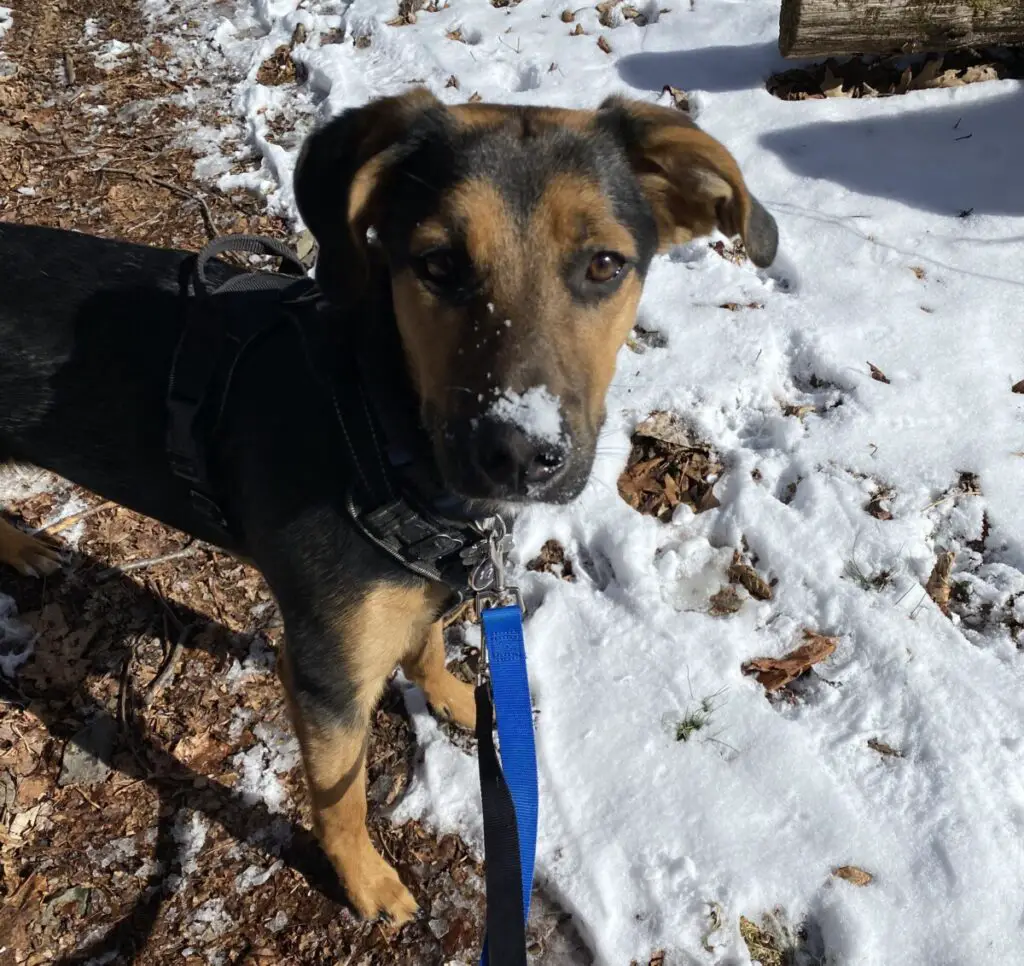
If your dog vacuums the ground like a Roomba with legs, training comes before longer hikes. Just the other day, when I walked my dogs, someone left a bunch of bread on the trail, and since my dogs are adolescents, Zina picked it up – but because I have been working with her, she dropped it immediately.
Rule #4: Friendly Dogs Still Need Space
Your dog might love other dogs. That doesn’t mean:
- Other dogs love your dog
- Other dogs are safe
- Other handlers want interaction
Never allow your dog to rush another dog, leashed or not.
Trail greetings should be:
- with Consent
- Brief
- Optional
- Controlled
If someone steps off trail, shortens their leash, or says “please give us space,” that is not an insult. It’s communication.
Respect it. Immediately. No commentary.
Rule #5: Reactive Dogs Belong on Trails Too
Let’s say this clearly:
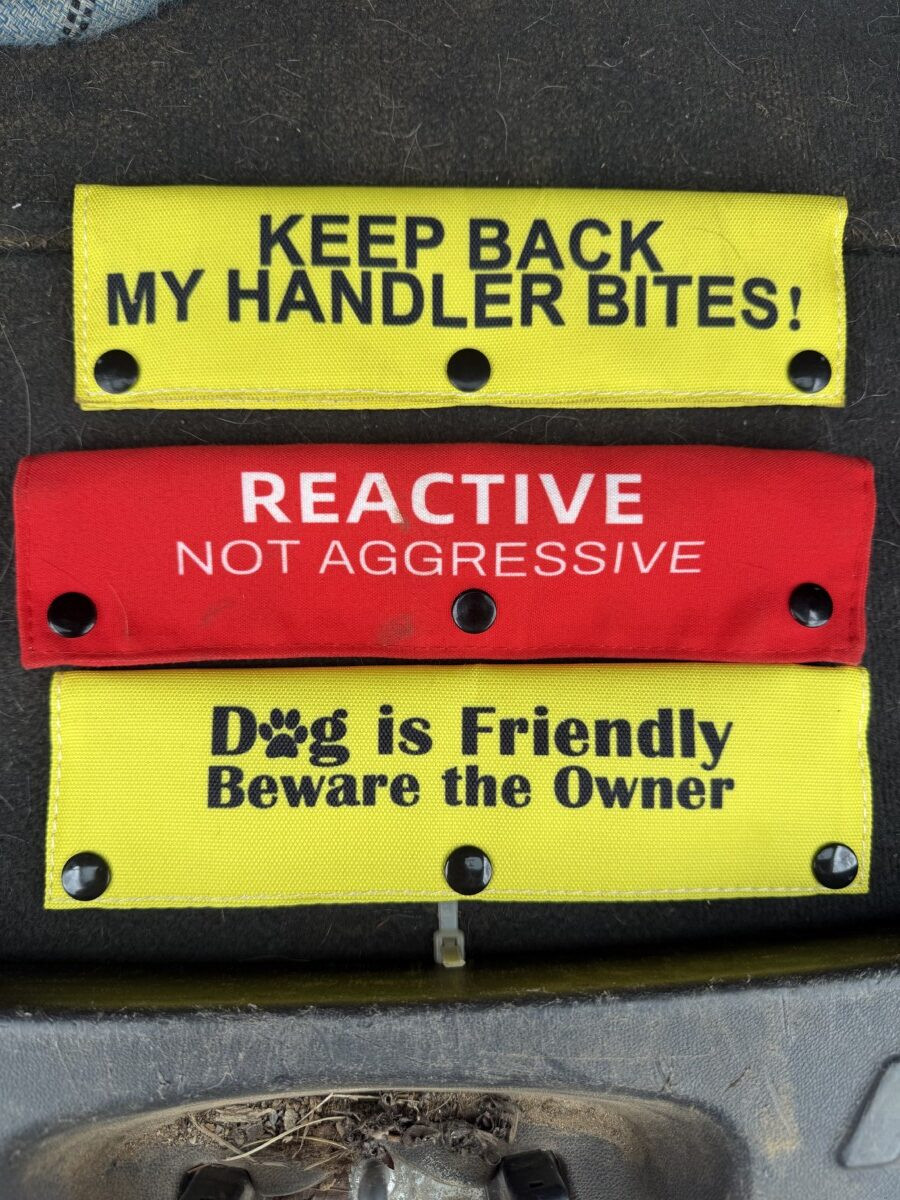
Reactive dogs are not bad dogs.
They are often:
- Overstimulated
- Fearful
- Healing
- Learning
And many of us hike early mornings, quieter trails, or off-hours specifically to make this work safely.
If you see someone:
- Pulling off trail
- Turning around
- Managing distance
- Clearly working with their dog
The correct response is not “It’s okay, he’s friendly.” Or to come talk to the owner about what is going on.
The correct response is:
- Shorten your leash
- Keep moving
- Give space
Trails should not be reserved for only the easiest dogs.
Rule #6: You Are Responsible for Your Dog’s Conditioning
If you wouldn’t hike it barefoot with no water, don’t assume your dog can magically handle it.
Pay attention to:
- Distance
- Elevation
- Temperature
- Terrain
Dogs overheat faster than humans. Pads tear. Nails break. Muscles strain.
Build endurance gradually.
Check paws regularly.
Turn around before exhaustion—not after.
A tired dog is a risky dog.
Rule #7: Control Your Gear, Not Just Your Dog
Long retractable leashes on narrow trails?
Hard no.
They create:
- Trip hazards
- Sudden tension
- Zero reaction time
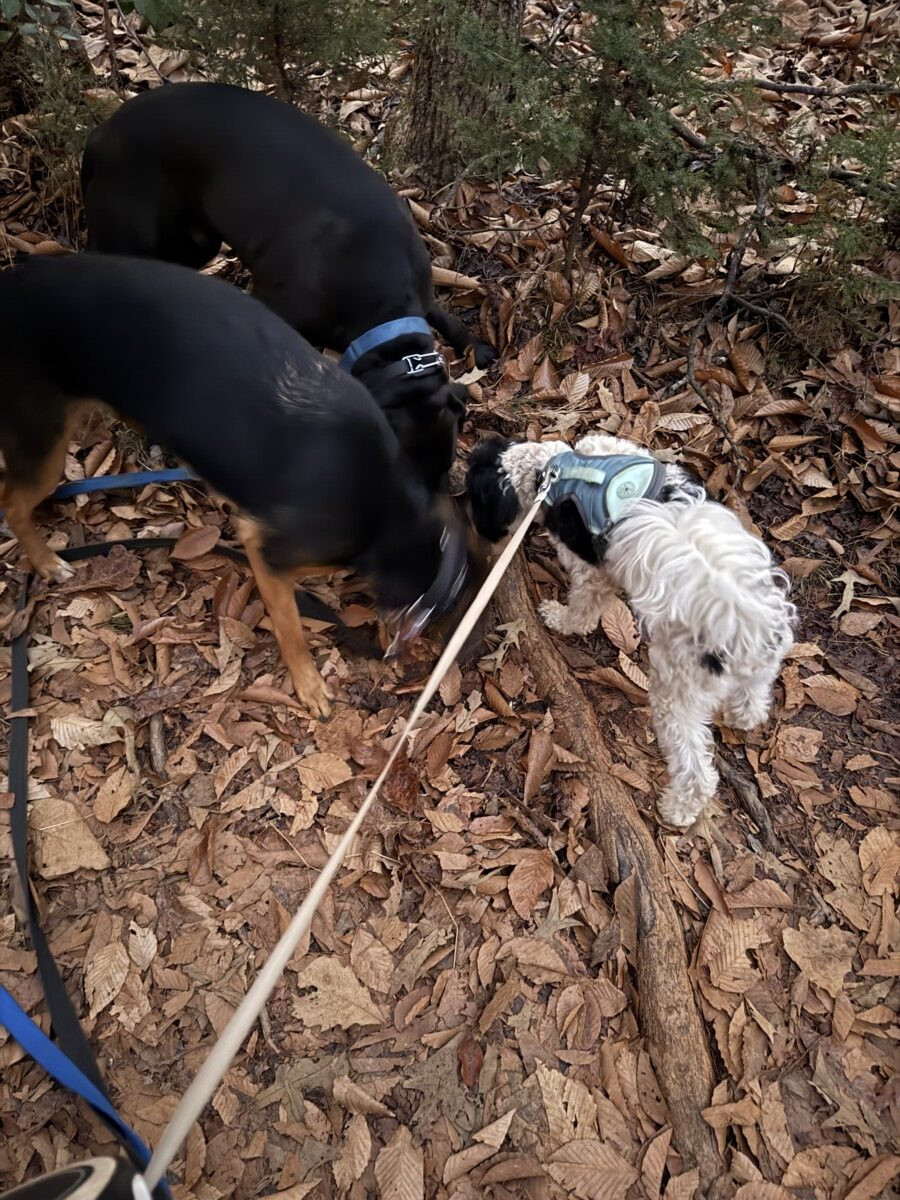
Use a fixed-length leash or a hands-free system you actually control. Keep your dog close when passing others.
And yes, pick up the poop. And pack it out. Always. Every time.
Rule #8: Wildlife Is Not Enrichment
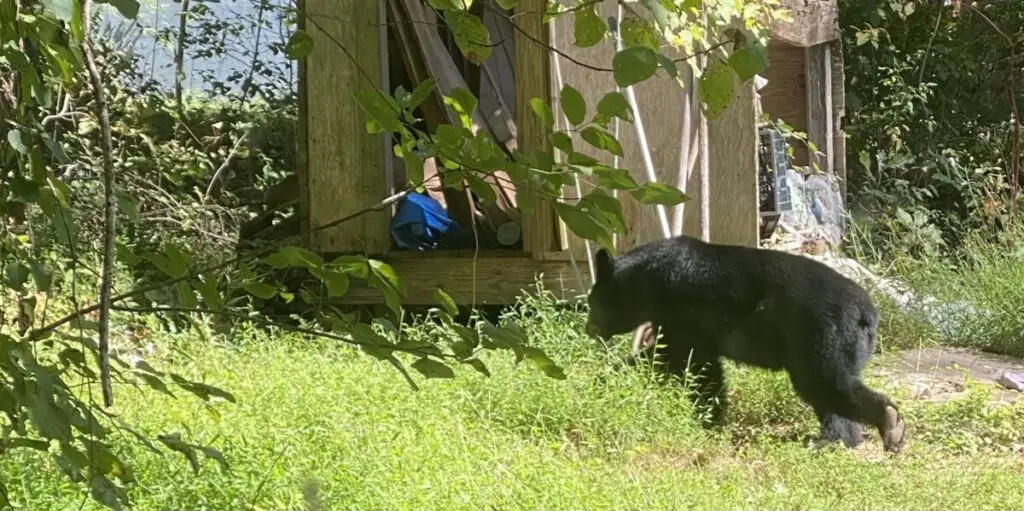
Chasing deer, squirrels, snakes, or birds is not “letting dogs be dogs.”
It’s dangerous.
It disrupts ecosystems.
It can trigger prey drive you can’t turn off mid-sprint.
Wildlife encounters end badly far more often than people admit.
Teach neutrality. Reward calm. Protect the land you’re enjoying.
Rule #9: Know When Not to Hike
This one hurts feelings, but it matters.
Don’t hike if your dog:
- Is sick or injured
- Is in heat
- Is recovering from surgery
- Is clearly overstimulated or fearful that day
Some days are training days. Some days are rest days. Some days are “walk around the block and call it good” days.
Listening to your dog is part of being a good trail partner.
Rule #10: You Set the Tone
Your dog reads you.
If you’re rushed, distracted, scrolling, or ignoring leash pressure, your dog feels it. Calm handling creates calm dogs.
Hiking with dogs isn’t about checking mileage boxes. It’s about moving together safely.
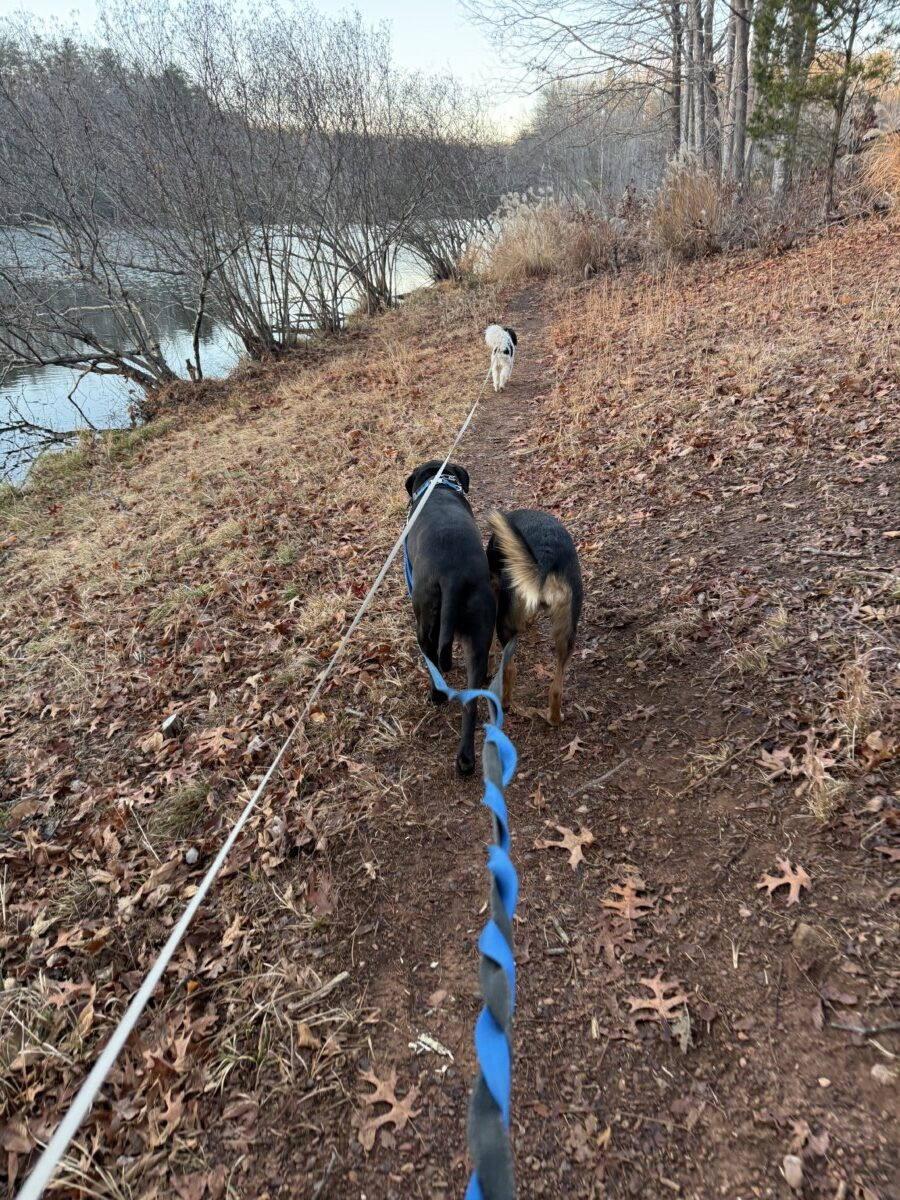
Hiking with dogs is a privilege, not a right. One earned through training, awareness, and respect.
Teach recall even on leash.
Teach leave it and drop it because people leave dangerous things behind.
Follow leash laws.
Give space.
Prepare properly.
When we hike responsibly with dogs, we protect:
- Our dogs
- Other hikers
- Other dogs
- The trails themselves
And we make sure dogs continue to be welcome out there.
That’s the goal. Not perfection. Just responsibility.

Leave a Reply