
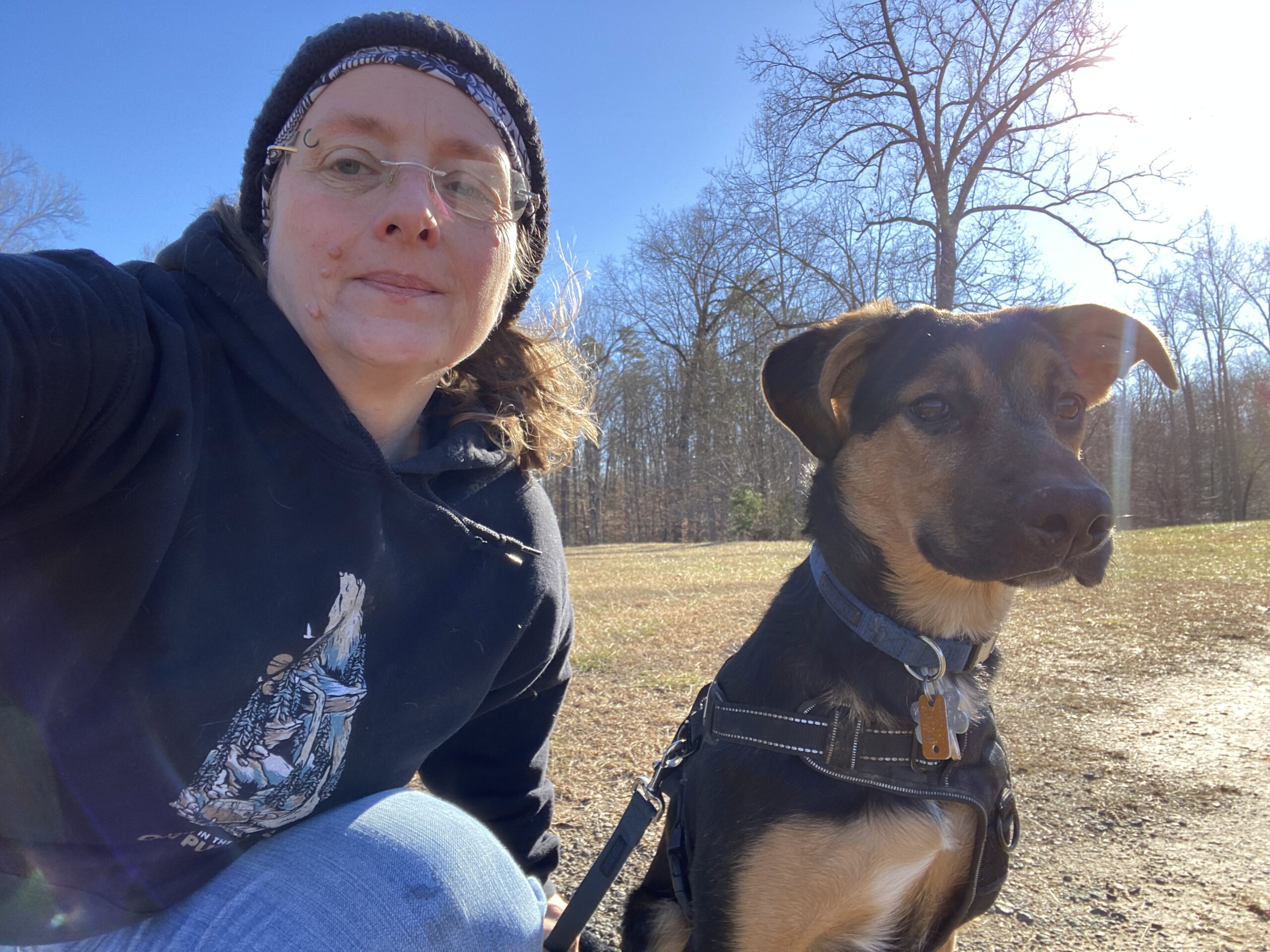
I used to think hiking “with dogs” was a lesser version of hiking.
Slower.
Messier.
Less focused.
I thought real hiking meant:
- steady forward motion
- uninterrupted miles
- clean pacing
- quiet accomplishment
And then I spent enough time on the trail with my dogs to realize how wrong that framing was.
Hiking with dogs didn’t take something away from the experience.
It gave me the experience I’d been missing.
The myth of the perfect hike
There’s a very specific image of hiking that gets quietly reinforced everywhere, in photos, reels, challenges, and gear ads.
It looks like:
- long, uninterrupted stretches
- purposeful movement
- solitude without interruption
- a sense of progress that’s easy to measure
Dogs don’t fit neatly into that image.
Dogs stop.
Dogs sniff.
Dogs notice everything you don’t.
Dogs sometimes say, “Absolutely not that direction today.”
So we label hiking with dogs as:
- a compromise
- a distraction
- something you do instead of a “real” hike
That mindset misses the point entirely.
Dogs don’t hike for achievement
Dogs don’t care about distance.
They don’t care about your pace.
They don’t care about your stats.
They don’t care if you’ve been on this trail before.
They hike for:
- information
- presence
- regulation
- curiosity
They experience the trail through their bodies, not through a sense of accomplishment.
And when you hike with them long enough, they pull you out of your head whether you want to go or not.
Slowness isn’t a flaw, it’s the lesson
Hiking with dogs forces slowness.
Not the aesthetic kind.
The real kind.
The kind where:
- you stop mid-step because something matters to them
- you wait while they process the environment
- you adjust your route based on their comfort
At first, that can feel frustrating, especially if you’re used to treating hikes as something to complete.
But slowness does something important.
It removes urgency.
And without urgency, you start noticing things you normally rush past:
- shifts in light
- subtle trail sounds
- tension in your own body
- the moment your breathing finally settles
Dogs don’t just slow the hike.
They slow you.
Reactive dogs belong on the trail, too
This part matters enough to say plainly.
Reactive dogs are welcome on the trail.
Not tolerated.
Not treated as a problem to overcome.
Welcome.
Hiking with a reactive dog requires:
- planning
- awareness
- distance
- flexibility
- the willingness to turn around
That’s not a weakness.
That’s skill.
It teaches you how to:
- read the environment
- choose quieter routes
- advocate for space
- let go of “finishing” a trail
Those skills translate directly into how you move through the world.
They also quietly dismantle the idea that hiking has to look a certain way to count.
Why “dogs welcome” is a design choice
When I created The Ridge Raven Trail Year, “dogs welcome” wasn’t an afterthought or a cute tagline.
It was a boundary.
I didn’t want a challenge where people felt like they had to:
- leave their dogs behind to “do it right”
- apologize for slower hikes
- feel behind because their walk didn’t look efficient
The Trail Year is built around one simple requirement: walk once a week.
That’s it.
If your walk includes:
- stopping every ten feet
- scanning for other dogs
- choosing the wide shoulder instead of the summit
- circling the same quiet loop repeatedly
You’re doing it correctly.
Dogs change how we define success
Hiking with dogs redefines what a “good” hike is.
Success becomes:
- everyone stayed regulated
- nobody got overwhelmed
- you returned home grounded instead of depleted
That definition is far more sustainable than mileage goals.
It also makes it easier to keep walking week after week, which is the entire point of a year-long practice.
Dogs don’t burn out on challenges.
They burn out on pressure.
The Trail Year makes space for real trail life
In the Ridge Raven Trail Year:
- there’s no penalty for short walks
- no reward for pushing past comfort
- no requirement to hike popular routes
You don’t earn more credit for suffering.
You earn the year by returning.
That design choice matters most for people whose hikes include:
- dogs
- kids
- anxiety
- chronic pain
- unpredictable schedules
It tells the truth about what most trail time actually looks like.
Dogs are excellent teachers of attention
One of the quiet gifts of hiking with dogs is how much they train your awareness.
They notice:
- changes in scent
- shifts in wind
- movement you didn’t clock
- tension before you consciously feel it
When you walk with them long enough, you start paying attention earlier, softer, and more honestly.
That’s not distraction.
That’s attunement.
If you’ve been minimizing your hikes
If you’ve ever thought:
- “It doesn’t count because it was short”
- “It doesn’t count because my dog slowed me down”
- “It doesn’t count because we didn’t go far”
I want to say this clearly:
That walk mattered.
And if you’re walking with dogs, you’re already practicing exactly what the Trail Year is about — presence, flexibility, and return.
A year of walking looks different with dogs, and that’s the point
A year of hiking with dogs won’t be tidy.
It will be:
- repetitive
- uneven
- occasionally frustrating
- deeply grounding
You’ll learn how to listen sooner.
You’ll stop forcing progress.
You’ll redefine what consistency means.
That’s not lesser.
That’s more honest.
Join the Ridge Raven Trail Year
If you hike with dogs, reactive, slow, curious, anxious, or exuberant.
If you want a hiking challenge that doesn’t punish real life.
If you want a year that makes room for how you actually move through the world.
You’re welcome here.
Join the Ridge Raven Trail Year
One walk a week. Dogs welcome. Always.

Leave a Reply