
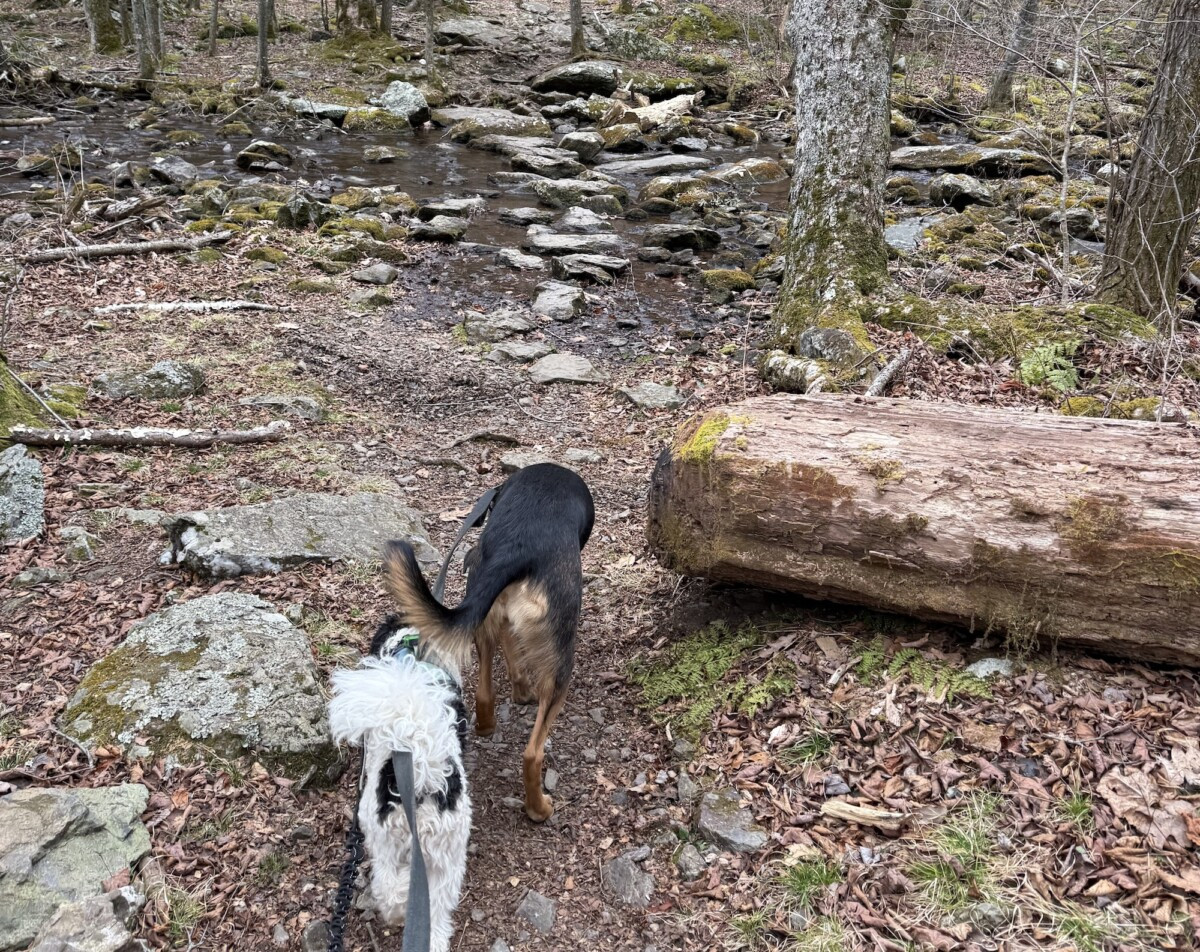
If you hike with a reactive or sensitive dog, you already know the math.
Every encounter costs energy.
Another dog.
A runner.
A bike.
A voice around a bend.
By the time you reach the halfway point, you’re managing not just your dog, but your own nervous system too.
The problem isn’t that you’re doing it wrong.
The problem is that most hiking advice isn’t written for this reality.
The Goal Isn’t a Perfect Hike
A perfect hike is a myth.
A successful hike is one where:
- you noticed early
- you adjusted calmly
- you kept everyone safe
That might mean turning around.
That might mean shortening the route.
That might mean sitting quietly and letting the moment pass.
Success is contextual, not visual.
Planning Reduces Trigger Load
One of the biggest mistakes people make is treating every hike the same.
Distance matters less than:
- trail width
- sight lines
- expected traffic
- escape options
Planning with your dog in mind isn’t limiting, it’s strategic.
A slightly boring trail that keeps everyone regulated is often better than a “beautiful” trail that pushes everyone past threshold.
On-Trail Decisions Don’t Need Drama
Reactive dog hiking gets easier when you remove moral judgment from decisions.
Turning back isn’t quitting.
Crossing the trail early isn’t avoidance.
Pausing to breathe isn’t weakness.
They’re tools.
And tools only work if you give yourself permission to use them.
Tracking Patterns Changes Everything
One of the most powerful shifts happens when you stop relying on memory.
Memory is emotional.
Notes are factual.
When you track:
- what triggered your dog
- how they responded
- what helped
you stop guessing and start recognizing patterns.
That’s when hiking becomes less stressful, because decisions feel informed, not reactive.
You’re Allowed to Protect the Experience
You don’t owe strangers a training demonstration.
You don’t owe the trail a specific outcome.
You owe yourself and your dog a safe experience.
Sometimes that means choosing quieter times.
Sometimes it means skipping a trail altogether.
Sometimes it means doing less, and enjoying it more.
A Planner Built for This Reality
SOLO HIKING WITH YOUR DOG exists for hikers who love their dogs and live in the real world.
It helps you:
- check readiness before you go
- manage encounters without judgment
- support recovery after the hike
- build confidence through awareness, not pressure
Because hiking with a reactive or sensitive dog isn’t about fixing them.
It’s about understanding them and choosing hikes that work for both of you.

Solo Hiking with your Dog
- Trail Snapshot – trail details that matter for dogs
- Readiness Check – energy, body, and mental state
- Gear & Management Notes – realistic, practical prep
- On-Trail Observations – triggers, responses, adjustments
- Post-Hike Recovery & Wins – settle, reflect, learn


Leave a Reply