
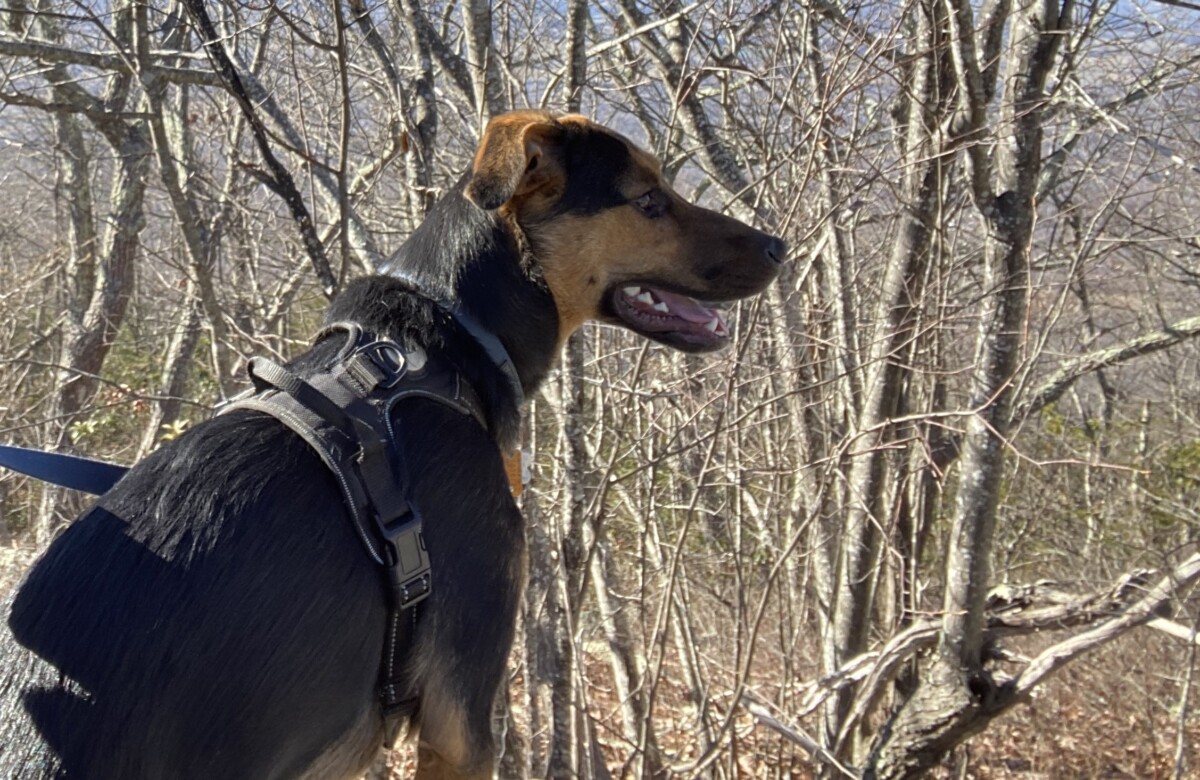
There’s a quiet pressure that shows up when you hike with a dog.
Not always from other people, but from inside your own head.
Will my dog react?
What if we run into someone on a narrow trail?
What if today is the day everything goes sideways?
For many women who hike solo with dogs, the goal quietly shifts from enjoying the hike to managing the dog. And that’s exhausting.
Here’s the truth most advice skips:
Solo hiking with your dog isn’t about perfect behavior. It’s about awareness.
Calm Hikes Start Before You Leave the House
Most trail issues don’t start on the trail. They start before the car door closes.
Energy matters.
Mental state matters.
So does being honest about the kind of hike your dog can handle today—not on their best day, not last month, not in theory.
A short, quiet hike where everyone stays regulated is a success. A longer hike that turns into trigger stacking and stress isn’t.
Awareness means checking in before you ask more of your dog.
Every Trail Is a Different Environment
A familiar distance doesn’t mean a familiar experience.
Some trails are narrow and enclosed.
Some amplify sound.
Some are busy in ways you didn’t expect.
Awareness isn’t memorizing every possibility, it’s noticing how a specific trail affects your specific dog.
That information compounds over time. And once you start noticing patterns, decision-making gets easier.
Encounters Aren’t Failures
Running into triggers doesn’t mean the hike failed.
What matters is:
- how early you noticed
- how you adjusted
- what you learned
Awareness lets you move from reacting to responding. That shift alone reduces stress for both you and your dog.
You don’t need to control the environment. You need to observe how your dog experiences it.
Recovery Is Part of Safety
A lot of hiking advice stops when the hike ends.
But dogs don’t always reset the moment you get back to the car.
Recovery matters.
Water.
Rest.
Decompression.
Quiet time.
When recovery becomes part of your hiking rhythm, future hikes improve. Dogs learn that stress is followed by safety. That predictability builds trust.
Why Awareness Builds Confidence
The more you notice, the less you spiral.
Instead of:
Why is my dog like this?
you start asking:
What helps us on this kind of trail?
Instead of:
Should I even be doing this?
you ask:
What would make this safer next time?
That’s confidence, not loud, not performative, just earned.
A Tool for Real-Life Dog Hiking
This is exactly why I created SOLO HIKING WITH YOUR DOG.
Not as a training plan.
Not as a list of rules.
But as a calm, practical planner to help you:
- check readiness
- plan intentionally
- log what actually happens
- support recovery afterward
Because hiking with your dog isn’t about proving anything.
It’s about awareness, patience, and choosing what’s right—for both of you—on any given day.

Solo Hiking with your Dog
- Trail Snapshot – trail details that matter for dogs
- Readiness Check – energy, body, and mental state
- Gear & Management Notes – realistic, practical prep
- On-Trail Observations – triggers, responses, adjustments
- Post-Hike Recovery & Wins – settle, reflect, learn


Leave a Reply