
Confident solo hikers don’t usually look dramatic from the outside.
They don’t rush.
They don’t posture.
They don’t need to announce what they’re doing.
Their confidence is quiet, and it’s built through skills most people never talk about.
Skill #1: Decision-Making Without Guilt
Confident solo hikers decide without apologizing to themselves or anyone else.
They turn back without calling it quitting.
They change plans without calling it weakness.
They understand that safety isn’t a moral issue. It’s a practical one.
Skill #2: Listening to Subtle Signals
The body speaks quietly at first.
A slight tension.
A drop in energy.
A feeling that something isn’t quite right.
Confident hikers don’t ignore these signals until they become loud. They notice early and respond calmly.
This skill isn’t instinct, it’s practice.
Skill #3: Letting the Hike Be What It Is
Not every hike needs to be epic.
Some hikes are short.
Some are slow.
Some are cut short entirely.
Confident hikers don’t force a narrative onto the trail. They let the day be what it is and adjust accordingly.
That flexibility keeps hiking sustainable, not just physically, but mentally.
Skill #4: Reflecting Without Judgment
After the hike, confident hikers don’t replay every moment to criticize themselves.
They review.
They learn.
They move on.
Reflection without judgment builds trust. Judgment erodes it.
Skill #5: Using Tools That Support, Not Scare
The best tools for solo hikers don’t amplify fear. They support decision-making.
A simple planner that helps you clarify your plan, track what you notice, and reflect afterward can make a huge difference—especially if you’re newer to solo hiking or returning after time away.
That’s the gap the Solo Hiking Safety Planner for Women fills.
It supports the quiet skills that confident solo hikers build over time—without pressure, without bravado, and without fear-based messaging.
Because confidence on the trail isn’t loud.
It’s steady.
And it’s earned.
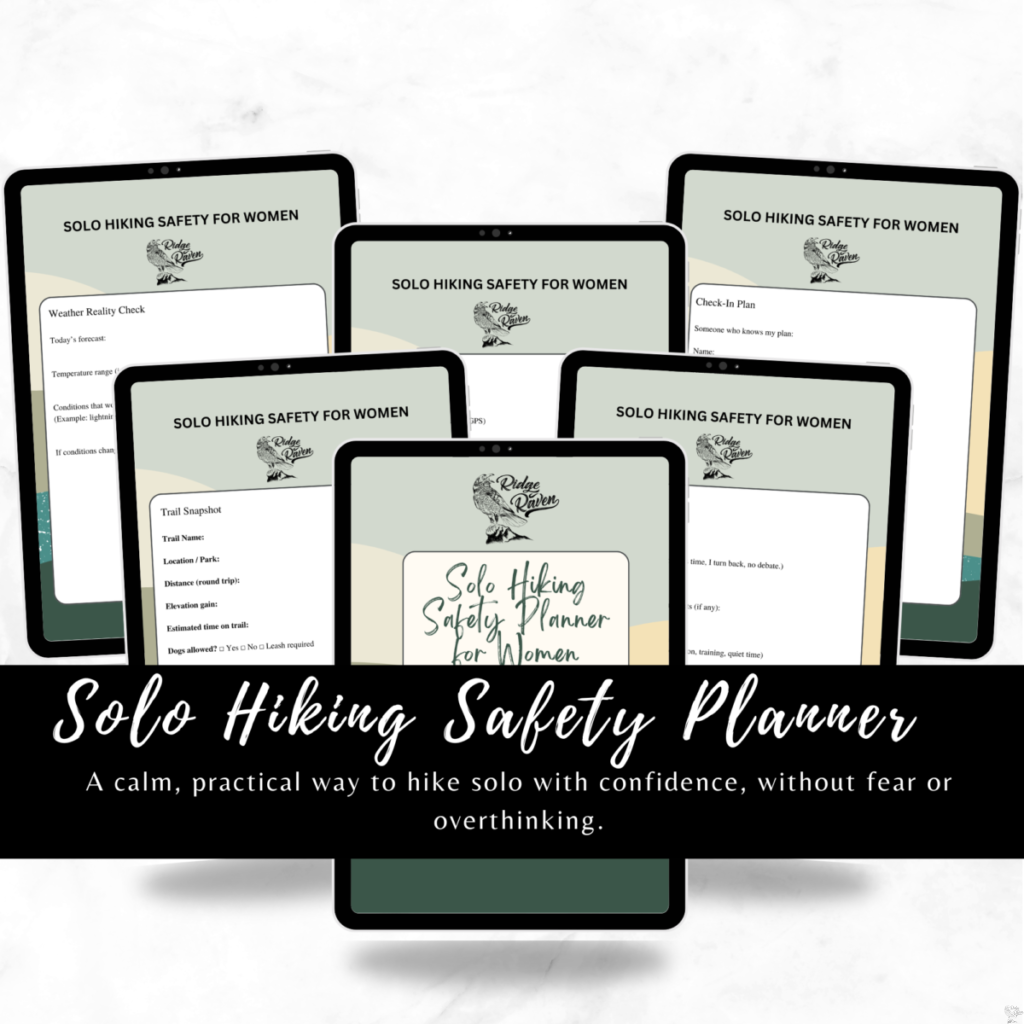
Solo Hiking Safety Planner for Women
- Plan solo hikes without spiraling into “what ifs”
- Create a simple, responsible check-in system
- Stay aware on the trail without being hyper-vigilant
- Make confident decisions—including turning back when needed
- Build self-trust through reflection, not bravado

Leave a Reply